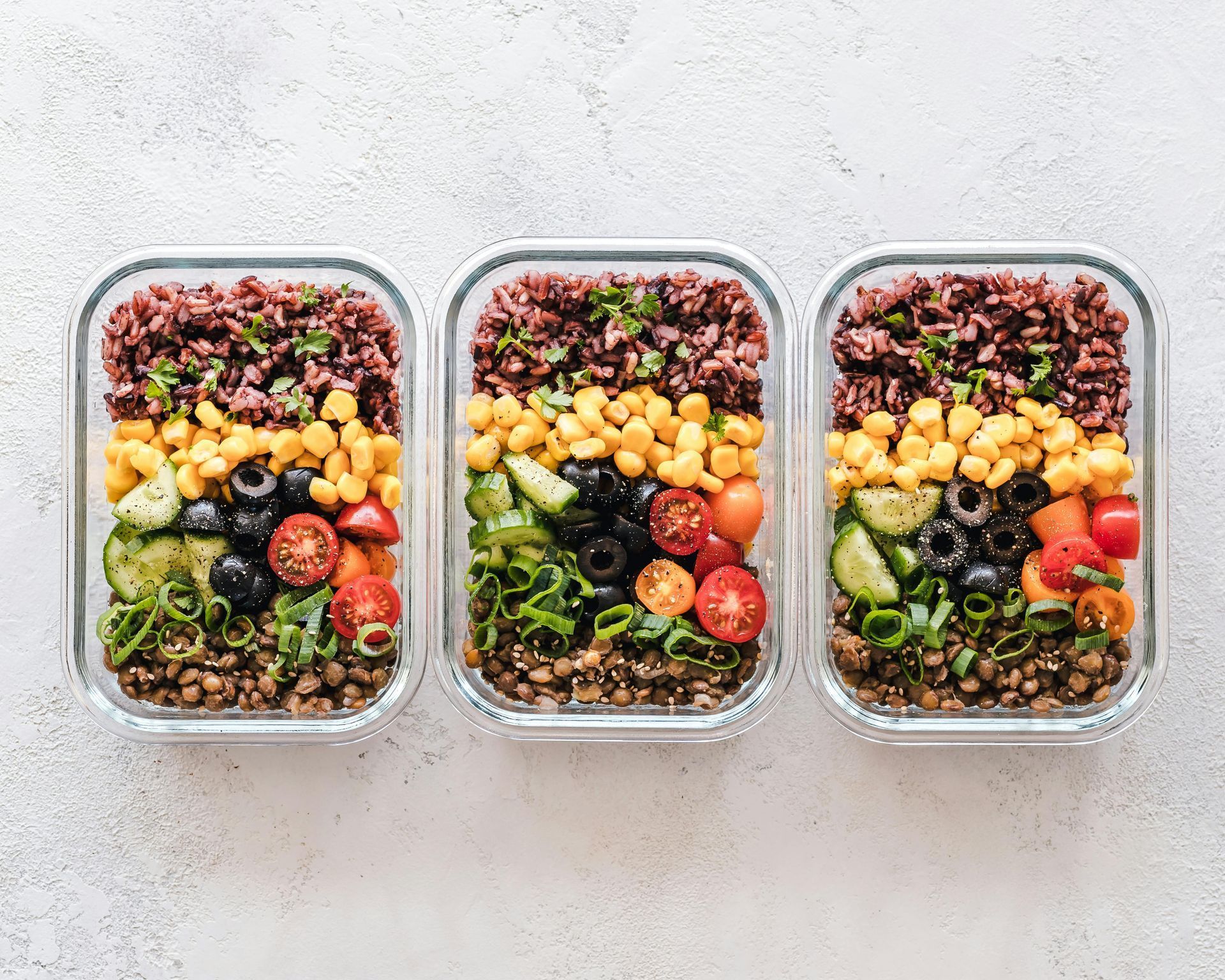
What to eat before a workout, and when to eat it, is one of the most hotly debated topics in fitness. Everybody has an opinion. The good news is that exercise science gives us actual research to work from, so we don't have to guess. Here's what we tell members at Iron Keep Fitness in Portland. What Should You Eat Before a Workout? The general consensus: a full meal that's roughly two-thirds carbohydrates and one-third protein , eaten one to two hours before you train. Enough food that you're not fighting hunger halfway through the workout. The split matters because the two macros do different jobs: Carbs fuel the work. They're what your body burns to hit the barbell hard and hold on through a metcon. Protein rebuilds. It's what repairs muscle tissue afterward so you recover and come back stronger. Some practical examples: Oatmeal with a scoop of protein powder and a banana Rice, chicken, and vegetables Greek yogurt with berries and granola A turkey sandwich on whole grain bread How many grams of carbs and protein you need each day is a much more individual number. It depends on your bodyweight, your training volume, and what you're actually chasing and, that's a conversation worth having with a coach. How Long Before a Workout Should You Eat? One to two hours is the sweet spot for a full meal. That gives your stomach time to empty enough that you're not sloshing through burpees, while the fuel is still available when you need it. Closer to class than that? Go smaller and lean toward carbs. Thirty minutes out, a banana, a rice cake with honey, or half a protein shake will do more for you than nothing at all. Should You Work Out on an Empty Stomach? Short answer: no. For years, "fasted cardio" was sold as a fat-loss shortcut, train before breakfast, burn more fat. Your body does burn a higher percentage of fat during the session. But when studies control for total daily calories and protein, that difference doesn't show up as better body composition weeks later. The scale doesn't care when you ate. What you do get is a worse workout. And that matters a lot in CrossFit, where the intensity is high and the engine runs on carbohydrate. No fuel means you can't push. If you can't push, you're not getting the adaptation you came for. It also doesn't matter that you don't feel hungry. Hunger cues and available fuel are two different things. What About the 5:45 Class? This is the honest exception. Nobody's eating a full meal at 4 AM. You don't need one. You need something small and mostly carbohydrate, 20 to 30 minutes before class: A banana A slice of toast with jam or honey A handful of dates Half a protein shake with a scoop of oats Applesauce pouch Then eat a real breakfast with protein after you train. Something beats nothing every single time. What to Eat After Your Workout A protein shake right after training is an easy, effective way to hit your daily protein target, especially when your next real meal is hours out. It doesn't have to be a shake, it just has to happen. The daily total matters more than the thirty-minute window everyone used to panic about. Making It Actually Happen Knowing what to eat is the easy part. Having it ready when you're walking out the door at 5:40 AM is the hard part. We live in a world with a ridiculous number of solutions to that problem: grab-and-go snacks, protein shakes and bars, meal prep services, batch cooking on Sunday. Pick the one you'll actually keep up with. Consistency beats optimization. Talk to a Coach This is the stuff our coaching staff loves to nerd out on. Grab any of us before or after class and ask, we'd rather answer the question than watch you white-knuckle through a workout on an empty tank. If you want to go deeper than a hallway conversation, ask about nutrition coaching . We'll build targets around your bodyweight, your training, and your actual goals instead of a generic internet number.

AMRAP, EMOM, WOD, metcon, RX. A plain-English glossary of the CrossFit words you'll hear at Iron Keep Fitness in Portland — no jargon explaining jargon.
A minute-by-minute walkthrough of your first hour at Iron Keep Fitness in Southeast Portland — from the whiteboard brief to the cool-down. No surprises, no experience required.

Explore how functional fitness enhances daily life. Join us to empower your journey today!

Iron Keep Fitness, formerly Mt. Tabor CrossFit, focuses on community & personal growth. Join us for a unique approach to functional fitness!

Understand perimenopause & how strength training aids women's health. Join us at Iron Keep Fitness for personalized support.

Sleep is the ultimate recovery tool for CrossFit athletes. Discover how quality rest boosts
muscle growth, performance, and injury prevention.

Understand good vs. bad stress in fitness. Learn strategies for managing stress effectively. Join our community today!
Nutrition is vital for CrossFit success. Boost performance & recovery with our expert coaching. Join Iron Keep Fitness today!

Howdy from Alex Asking for help does not mean that we are weak or incompetent. It usually indicates an advanced level of honesty and intelligence — Anne Wilson Schaef Have...
The post 09/23/24 Mt. Tabor CrossFit Newsletter appeared first on Mt. Tabor CrossFit.